
The Complete Guide to Chandan Powder
Why Chandan Powder Remains an Essential Part of Temple Worship, Puja, and Vaishnava Culture

The Complete Guide to Chandan Powder — Sandalwood’s Role in Temple Worship and Daily Devotion
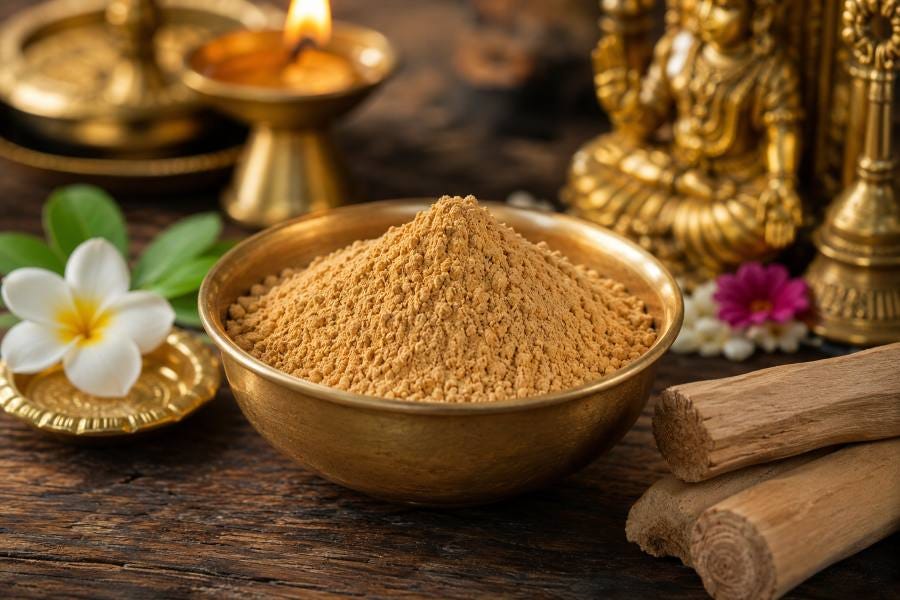
Imagine entering an ancient temple just before sunrise. The bells have not yet begun to ring. The first rays of light touch the deity’s altar. A priest carefully prepares offerings for worship, and among the flowers, incense, and sacred water sits a small bowl containing a fragrant golden paste.
That paste is made from Chandan Powder, one of the most respected and spiritually significant substances in Hindu worship.
For thousands of years, sandalwood has occupied a unique place in Vedic culture. Kings valued it. Saints praised it. Temples relied upon it. Devotees offered it daily as an expression of love and reverence toward God.
Yet many people know Chandan only as a pleasant fragrance or a tilak ingredient. Its actual significance goes far deeper.
Behind every application of Chandan lies a rich history of devotion, symbolism, philosophy, and sacred tradition that continues to shape spiritual practices around the world.
This guide explores why Chandan Powder remains one of the most treasured elements of temple worship and daily devotion.
Why Chandan Powder Holds a Special Place in Hindu Tradition
Many natural substances appear in Hindu rituals.
Flowers are offered.
Water is sanctified.
Incense is burned.
Fruits are presented to the deity.
Yet sandalwood occupies a category of its own.
Ancient spiritual teachers observed qualities in sandalwood that mirrored the characteristics of saintly living.
Consider what makes sandalwood unique:
· It remains cool even during intense heat.
· It releases fragrance when rubbed.
· It benefits others without expecting anything in return.
· It retains its qualities regardless of circumstances.
These observations became spiritual lessons.
A devotee is expected to remain calm during challenges.
A saint spreads goodness even when facing difficulties.
A spiritual person helps others without seeking recognition.
Because sandalwood naturally embodies these ideals, it became a powerful symbol within Hindu thought.
What Exactly Is Chandan Powder?
Chandan Powder is created from the heartwood of mature sandalwood trees.
The most respected variety traditionally comes from Indian sandalwood.
After harvesting, the heartwood is carefully processed into a fine powder. When mixed with water, rose water, or other sacred ingredients, it forms a smooth paste used for worship and ceremonial applications.
Traditional preparation methods involved rubbing sandalwood sticks against specially designed grinding stones.
Many temples continue this practice today.
Why?
Because preparation itself is considered an act of devotion.
The process slows the mind, encourages mindfulness, and transforms an ordinary task into spiritual service.
A Fragrance That Became Sacred
Not every pleasant aroma became part of religious tradition.
Sandalwood earned that distinction for specific reasons.
The fragrance of Chandan is:
· Gentle rather than overpowering
· Long-lasting without being intrusive
· Naturally calming
· Associated with purity
These characteristics make it ideal for sacred environments.
Think about the atmosphere inside a temple.
The goal is not excitement.
The goal is reflection.
Devotion.
Connection.
The aroma of sandalwood supports that environment beautifully.
Its scent seems to invite the mind inward.
That quality has made it a favorite in temples for centuries.
How Chandan Powder Became Essential in Temple Worship
Temple worship in Hinduism involves much more than offering prayers.
Deities are traditionally served with the care and respect one would offer an honored guest.
This principle is known throughout many devotional traditions.
When a respected guest arrives, several things are offered:
· A place to sit
· Water
· Fragrance
· Decorations
· Refreshments
Similarly, deities receive offerings that express love and hospitality.
Chandan Powder plays an important role in this service.
Applying Sandalwood to the Deity
One common practice involves decorating the deity with sandalwood paste.
This serves multiple purposes:
Expression of affection
The application reflects personal devotion and care.
Cooling effect
Particularly during warmer seasons, sandalwood symbolizes comfort and refreshment.
Beautification
Sacred decoration enhances the worship experience.
Scriptural tradition
Many ancient texts specifically mention sandalwood offerings.
As a result, Chandan became deeply woven into daily temple rituals.
The Spiritual Meaning Behind Offering Chandan
At first glance, offering sandalwood may seem like a simple ritual action.
Its symbolism is far richer.
When devotees offer Chandan, they are offering qualities they hope to cultivate within themselves.
The fragrance represents purity.
The cooling nature represents self-control.
The smooth texture represents humility.
The sacred use represents devotion.
Viewed this way, the offering becomes a personal prayer.
A devotee is essentially saying:
“May my heart become as pure as this sandalwood. May my thoughts become as cooling and peaceful as its fragrance.”
That perspective transforms ritual into meaningful spiritual practice.
Chandan and Daily Devotion at Home
Temple worship often receives attention, but Chandan also plays an important role in household spirituality.
Across India and throughout Hindu communities worldwide, devotees use sandalwood in daily worship.
Morning routines frequently include:
· Preparing a home altar
· Offering prayers
· Applying tilak
· Decorating sacred images
· Creating a devotional atmosphere
Chandan naturally fits into each of these activities.
Its presence helps distinguish worship time from ordinary daily tasks.
That distinction matters.
Spiritual habits become stronger when supported by meaningful rituals.
Even a simple application of sandalwood can signal the mind that it is time to focus on prayer and reflection.
Why Tilak Made from Chandan Matters
One of the most visible uses of Chandan Powder is the creation of tilak.
Millions of devotees apply sacred markings every day.
To some observers, tilak may appear purely cultural.
In reality, it carries profound spiritual meaning.
More Than a Forehead Mark
Traditional teachings describe the human body as a temple of the Divine.
Tilak serves as a reminder of that truth.
Every time a devotee sees the marking, it reinforces spiritual identity.
The practice encourages awareness of:
· One’s relationship with God
· The temporary nature of material life
· The importance of devotional service
· The need for spiritual focus
This daily reminder can influence behavior, decisions, and mindset throughout the day.
A small mark often carries a surprisingly powerful impact.
The Connection Between Chandan and Vaishnava Traditions
Among Vaishnavas, sandalwood occupies a particularly cherished position.
Devotees of Lord Vishnu, Lord Krishna, Lord Rama, and related forms regularly use Chandan in worship.
Scriptures frequently describe sandalwood in relation to:
· The Lord’s divine form
· Sacred festivals
· Temple rituals
· Devotional offerings
· Ceremonial decoration
Many famous temples hold special sandalwood festivals during warmer months.
During these celebrations, deities are covered with cooling Chandan paste as an expression of loving service.
These events attract thousands of devotees and remain among the most visually beautiful observances in temple culture.
Ancient Wisdom Hidden in a Simple Paste
One fascinating aspect of Chandan is how many layers of meaning exist within a single ritual substance.
Most people notice the fragrance first.
Others appreciate its cooling properties.
Some focus on its scriptural significance.
Yet beneath all these aspects lies a deeper lesson.
Sandalwood teaches transformation.
A sandalwood tree spends years developing its fragrance.
The aroma remains hidden inside the wood until effort is applied.
Grinding reveals what already existed.
Spiritual growth works similarly.
Qualities such as compassion, patience, humility, and devotion often emerge through effort and practice.
The symbolism is surprisingly elegant.
The process of preparing Chandan mirrors the process of refining one’s own character.
Chandan in Major Hindu Festivals
Throughout the year, numerous festivals feature sandalwood offerings.
Its use increases significantly during celebrations associated with deity worship.
Popular occasions include:
Janmashtami
Celebrating the appearance of Lord Krishna often involves elaborate Chandan decorations.
Rama Navami
Sandalwood paste is frequently used in ceremonial worship.
Narasimha Chaturdashi
Many temples include sandalwood offerings as part of the day’s observances.
Rath Yatra
Decorative and devotional uses of Chandan remain common.
Summer Sandalwood Festivals
Certain temples dedicate entire celebrations to sandalwood service.
These festivals highlight both the practical and symbolic value of Chandan.
The cooling properties are appreciated, while the devotional significance remains central.
The Ayurvedic View of Sandalwood
Although primarily known as a sacred substance, sandalwood also enjoys a respected place within Ayurveda.
Traditional Ayurvedic practitioners have valued sandalwood for generations.
Commonly recognized qualities include:
· Cooling nature
· Pleasant aroma
· Soothing characteristics
· Support for balance and calmness
Interestingly, these qualities align closely with spiritual symbolism.
The same substance believed to cool the body also symbolizes cooling the mind from anger, greed, and restlessness.
This harmony between physical and spiritual interpretations is one reason sandalwood has remained relevant for centuries.
Why Authentic Chandan Powder Matters
As demand grows worldwide, many products claim to contain sandalwood.
Quality varies dramatically.
Authentic Chandan Powder generally offers:
· Natural fragrance
· Fine texture
· Traditional preparation standards
· Purity suitable for worship
· Genuine sandalwood content
For devotional use, authenticity carries special importance.
Offerings are traditionally made with sincerity and care.
Many devotees therefore prefer products sourced specifically for religious purposes rather than generic fragrance applications.
Choosing authentic Chandan helps preserve both tradition and spiritual intention.
What Actually Happens During a Traditional Chandan Offering?
Many devotees see sandalwood being offered in temples but never get the chance to understand the sequence behind the ritual.
Every action has meaning.
Every offering communicates something.
A typical Chandan offering often follows these steps:
1. Preparation
The sandalwood is prepared carefully, often by mixing Chandan Powder with purified water, rose water, or other traditional ingredients.
The goal is to create a smooth, fragrant paste suitable for worship.
2. Sanctification
Prayers and mantras may be recited before the offering is presented.
This transforms a simple material into a sacred offering.
3. Application to the Deity
The sandalwood paste is gently applied to specific parts of the deity’s form according to temple traditions.
These may include:
· Forehead
· Arms
· Chest
· Lotus feet
The exact practice varies among different traditions and temples.
4. Devotional Meditation
While offering Chandan, devotees often meditate on qualities such as purity, humility, and service.
This internal aspect is just as important as the external ritual.
Without devotion, the ritual becomes mechanical.
With devotion, the offering becomes meaningful.
Why Chandan Powder Has Survived Thousands of Years
Many ancient customs disappeared over time.
Chandan did not.
There is a simple reason.
It fulfills multiple human needs at once.
It appeals to:
· The senses through fragrance
· The mind through symbolism
· The heart through devotion
· The intellect through philosophy
· The community through shared tradition
Very few ritual items achieve this balance.
People may initially appreciate Chandan because it smells pleasant.
Over time they discover deeper meanings.
That layered experience allows the tradition to remain relevant generation after generation.
The Hidden Psychology Behind Sacred Fragrance
Smell is often underestimated.
Yet it is one of the most powerful human senses.
A familiar fragrance can instantly bring back memories from years ago.
Many devotees experience exactly this when encountering sandalwood.
The scent may remind them of:
· Childhood temple visits
· Festival celebrations
· Spiritual teachers
· Family worship traditions
· Pilgrimages
Because fragrance connects directly with memory and emotion, sandalwood becomes more than an aroma.
It becomes a spiritual trigger.
The moment the scent appears, the mind naturally shifts toward devotion.
Ancient temple traditions understood this long before modern psychology began studying the relationship between scent and memory.
Preparing Chandan Paste the Traditional Way
One reason traditional sandalwood preparation remains respected is that it encourages mindfulness.
The process is simple but meaningful.
Step 1: Use Pure Chandan Powder
Start with high-quality sandalwood powder intended for worship.
Step 2: Add Small Amounts of Water
Gradually mix purified water or rose water.
Adding too much liquid at once can affect consistency.
Step 3: Create a Smooth Paste
The texture should be soft, even, and easy to apply.
Step 4: Offer with Devotion
The purpose of the paste is not decoration alone.
It is meant to be offered with sincerity and respect.
Many devotees find the preparation process itself meditative.
The slow, deliberate movements encourage concentration and calmness.
Common Mistakes Devotees Make
Although Chandan worship is simple, a few mistakes occur frequently.
Treating It as Decoration Only
The deeper purpose is spiritual.
The symbolism and devotion behind the offering matter most.
Using Artificial Substitutes
Synthetic products may imitate the fragrance but lack the traditional significance associated with genuine sandalwood.
Rushing the Ritual
Sacred practices become more meaningful when performed attentively.
Ignoring Purity Standards
Items intended for worship should be stored and handled respectfully.
Forgetting the Symbolism
The fragrance, cooling nature, and purity of Chandan all represent spiritual qualities worth remembering.
Avoiding these mistakes helps maintain the authenticity of devotional practice.
Chandan Powder and the Culture of Seva
The Sanskrit word “seva” means loving service.
Temple worship revolves around this concept.
Everything offered to the deity reflects a desire to serve.
Flowers are offered.
Food is offered.
Music is offered.
Prayers are offered.
Chandan is offered for the same reason.
The act teaches an important lesson.
Spirituality is not only about receiving blessings.
It is also about developing a service-oriented heart.
This perspective transforms worship from a request-based relationship into one rooted in gratitude and devotion.
That shift often becomes a turning point in a person’s spiritual journey.
How Chandan Supports Meditation and Prayer
Many people struggle with concentration during prayer.
The mind wanders.
Thoughts drift.
Attention shifts from one subject to another.
Chandan can help create conditions that encourage focus.
Its fragrance contributes to:
· Mental calmness
· Reduced distractions
· Sacred atmosphere
· Emotional grounding
· Consistent devotional habits
Of course, sandalwood alone does not create spiritual realization.
It simply supports practices that cultivate deeper awareness.
Think of it as preparing the environment for meaningful prayer.
The Global Rise of Traditional Hindu Worship
Over the last few decades, Hindu traditions have spread far beyond India.
Temples now exist across:
· North America
· Europe
· South America
· Africa
· Australia
· Southeast Asia
Interestingly, wherever temple worship expands, Chandan usually accompanies it.
The reason is simple.
Sandalwood is not tied to a particular region.
It is tied to a spiritual culture.
Whether a devotee worships in Mayapur, London, New York, Sydney, or Johannesburg, the fragrance of Chandan creates a familiar connection to tradition.
That continuity strengthens the global devotional community.
How to Choose Quality Chandan Powder
Not all sandalwood products are created equally.
A few considerations can help when selecting Chandan Powder.
Look for Natural Aroma
Authentic sandalwood generally has a soft, refined fragrance.
Artificial products often smell excessively strong.
Check Purity
Products intended for worship should contain genuine sandalwood without unnecessary additives.
Consider the Source
Trusted suppliers often maintain higher standards for devotional products.
Examine Texture
Quality Chandan Powder typically feels smooth and finely ground.
Buy from Reputable Spiritual Suppliers
Specialized devotional suppliers generally understand the importance of purity and authenticity.
Making thoughtful choices helps preserve both the worship experience and the spiritual significance of the offering.
Why Younger Generations Are Rediscovering Chandan
Something interesting is happening.
Many younger people are becoming curious about traditional spiritual practices.
Not because they are being forced to follow them.
Because they are searching for meaning.
Chandan appeals to this search.
It offers:
· A tangible connection to heritage
· A daily spiritual reminder
· A simple devotional practice
· A sense of continuity
· An experience that feels authentic
In a world dominated by digital experiences, the physical ritual of preparing and offering sandalwood feels surprisingly grounding.
That may explain why ancient traditions continue attracting new generations.
Frequently Asked Questions About Chandan Powder
Is Chandan Powder used only for temple worship?
No. Many devotees use it at home for daily worship, tilak application, and devotional practices.
Why is sandalwood considered sacred?
Its purity, fragrance, cooling nature, scriptural references, and long-standing role in worship contribute to its sacred status.
Can Chandan be applied every day?
Yes. Daily use is common among many devotional traditions.
Is Chandan Powder the same as sandalwood powder?
Generally yes, though products may vary in purity and intended use.
Why do priests apply Chandan to deities?
It is offered as an expression of devotion, respect, care, and sacred service.
Does Chandan have symbolic meaning?
Very much so. It symbolizes purity, peace, humility, devotion, and spiritual refinement.