
Incense Sticks: Best Choices for Home and Devotional Living
A practical guide to choosing the right incense for your altar, your living room, and every occasion in between.

Ever Stood in Front of a Shelf of Incense and Had No Idea What to Pick?
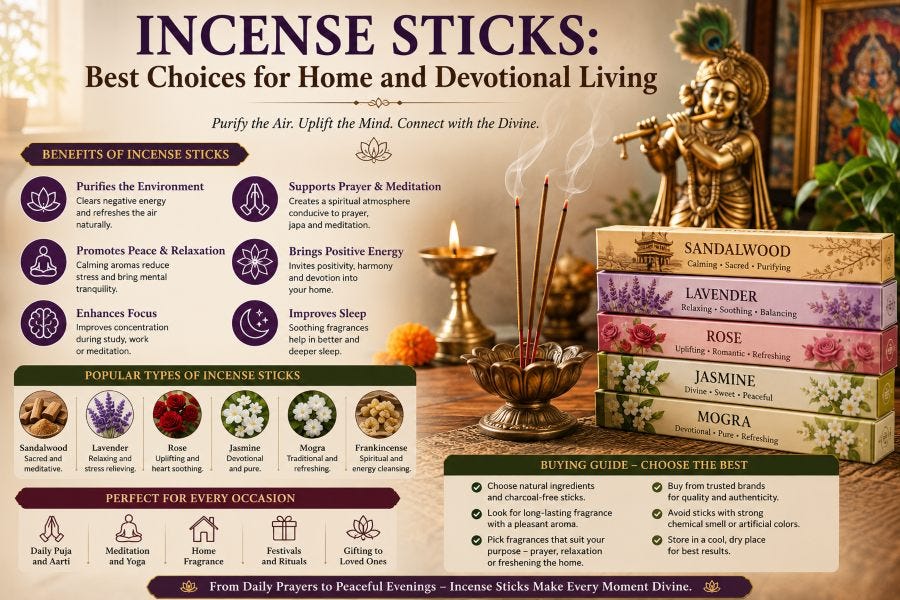
You’ve been there. Rows of boxes, half of them promising “relaxation,” the other half promising “positive energy,” and none of them telling you the one thing you actually need to know — which one is right for what you’re trying to do. Lighting a stick before your evening altar prayers calls for something different than lighting one just to freshen up your living room after dinner. Most people never make that distinction, and it’s exactly why so many boxes of incense sit half-used in a drawer, forgotten after the first stick failed to feel “right.” Getting this choice correct starts with understanding that Incense Sticks aren’t one single product — they’re a category with very different personalities inside it, and a trusted source like Mayapur Store makes it far easier to tell them apart before you buy.
This guide exists to fix that confusion permanently. We’ll walk through how to think about incense differently depending on whether you’re setting up a home altar, decompressing after work, or hosting guests for a festival evening — and how to actually judge quality instead of guessing from packaging alone.
Think about how differently you’d approach buying a bottle of oil for cooking versus one for a diya lamp. Same basic category, entirely different criteria for what “good” means. Incense works exactly the same way, and once that clicks, the whole shelf stops looking so overwhelming.
Home Use and Devotional Use Aren’t the Same Job
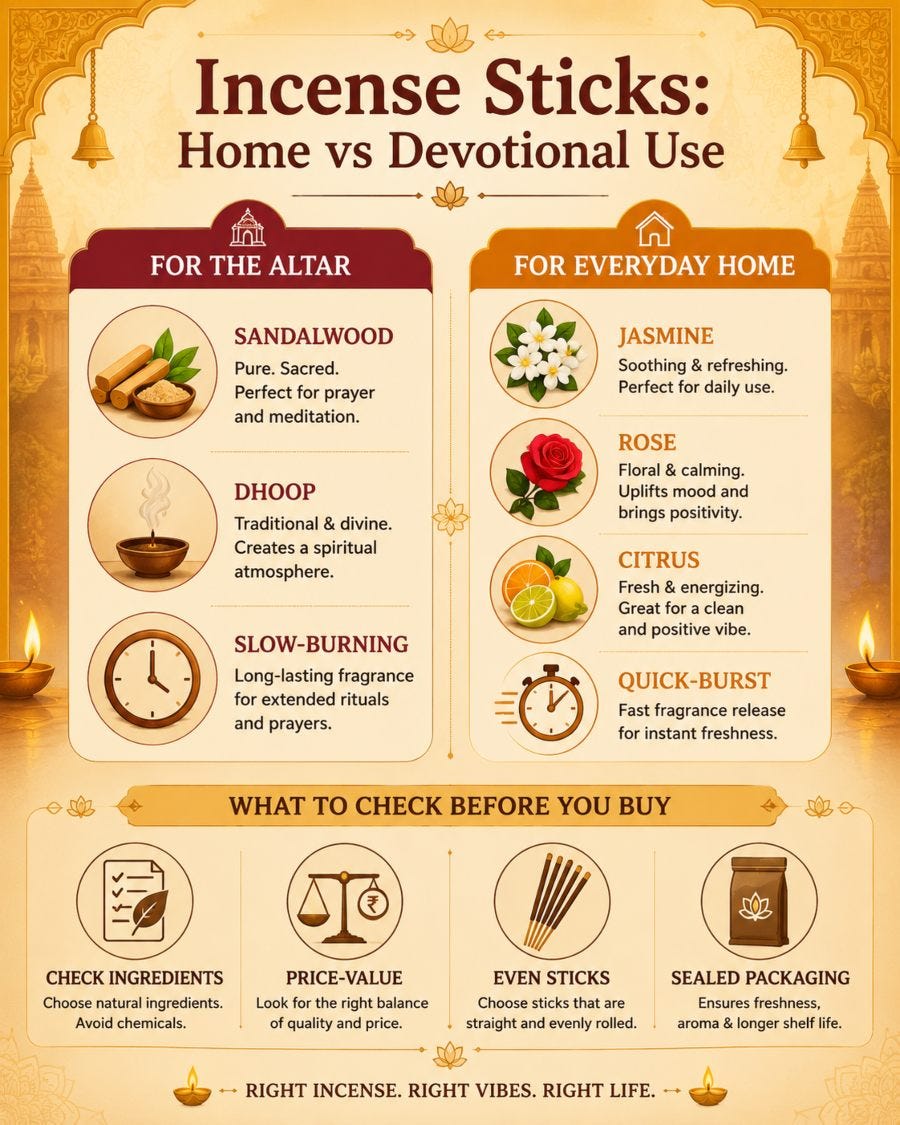
Here’s the mental shift that changes everything: incense for daily home comfort and incense for devotional practice are solving two completely different problems, even though they come out of the same box shape.
Home comfort incense is about atmosphere. You’re trying to make a room feel calmer, mask a cooking smell, or create a background mood while you read or unwind. The fragrance just needs to be pleasant and not overwhelming.
Devotional incense is doing something else entirely. It’s an offering — one of the traditional items presented to the deity during puja, alongside a lamp, water, and flowers. The fragrance here isn’t decoration; it’s a gesture of respect and service, meant to purify the space and settle the mind before worship begins. This is why temples treat incense selection far more seriously than the average household does, and why the incense used at an altar is often a completely different formulation from what gets burned in a living room.
Once you separate these two purposes in your head, choosing incense stops being a guessing game and starts being a straightforward decision based on what you’re actually trying to accomplish that day.
It also explains a pattern a lot of people notice but never quite articulate: the incense that feels “right” at the altar sometimes feels oddly heavy or out of place in the living room, and vice versa. That’s not inconsistency on your part — it’s your instincts correctly picking up on the fact that these are two different jobs wearing the same disguise.
What Makes an Incense Stick Suited for the Altar
If you’re setting up or maintaining a home shrine, not every fragrant stick belongs there. A few qualities matter more in a devotional setting than anywhere else.
Purity of ingredients. Traditional puja incense avoids heavy synthetic fragrance oils in favor of real sandalwood, agarwood, or herbal resins. The smoke should feel clean, not sharp or chemical.
A steady, unhurried burn. Devotional incense is meant to accompany a period of prayer or chanting, so a stick that burns evenly for thirty to forty-five minutes fits the rhythm of most daily rituals far better than one that flares out in ten.
A scent connected to tradition. Sandalwood remains the most common choice across Vaishnava households for a reason — it’s associated with clarity and calm, and it doesn’t compete with the other elements of the offering, like fresh flowers or camphor.
Consistency from batch to batch. You want the stick you light this morning to smell the same as the one you lit last month. Inconsistent sourcing is one of the quiet ways cheaper incense reveals itself over time.
None of this means devotional incense has to be expensive. It means it has to be made carefully, with attention paid to what’s actually going into the paste rather than just how the box looks on a shelf.
What Actually Matters for Everyday Home Fragrance
Home comfort incense has a looser set of requirements, and that’s genuinely fine — you’re not trying to recreate a temple atmosphere in your bedroom.
Lighter, more approachable scents tend to work better here. Jasmine, rose, and citrus blends are popular precisely because they’re pleasant without demanding attention.
Shorter burn times can actually be an advantage if you just want a quick refresh before guests arrive rather than a forty-minute session.
Variety is welcome. Where a devotional space benefits from consistency, a living room can rotate scents by season or mood without any downside.
Smoke density matters for comfort, especially in smaller apartments. A lighter stick that doesn’t leave the whole flat smelling smoky an hour later is usually the better everyday choice.
The honest truth is that a lot of people use the same incense for both purposes simply because it’s convenient, and there’s nothing wrong with that either. But once you understand the distinction, you’ll notice you naturally start reaching for different boxes depending on the moment — a heavier sandalwood or dhoop stick for the altar, something lighter and brighter for the living room.
Reading the Room: How Different Types of Incense Actually Behave
Understanding the mechanics of each type helps you predict how it’ll perform before you even light it.
Sandalwood
Smooth, woody, slightly sweet. Burns evenly and doesn’t overpower a room even in an enclosed space. This is the safest default for both devotional and everyday use, which is exactly why it’s the best-selling category almost everywhere. It also ages well as a scent memory — most people who grew up around any form of daily worship associate this particular fragrance with a sense of calm long before they understand why.
Agarwood (Oudh)
Deep, resinous, and genuinely complex — closer to a fine perfume than a simple fragrance stick. It’s priced accordingly, and it tends to suit special occasions rather than daily burning, both because of cost and because its intensity can feel like too much for a casual Tuesday evening.
Dhoop
No bamboo core, just compressed herb and resin. This gives a purer, stronger scent with less smoke residue from wood, which is exactly why many temples prefer dhoop for formal offerings over standard charcoal-based sticks.
Floral Blends
Rose and jasmine dominate this category. Softer, sweeter, and generally better suited to relaxed home settings, festive gatherings, or evenings when you want fragrance without any ceremonial weight behind it.
Herbal and Resin Blends
Frankincense, myrrh, and neem-based combinations sit here. These carry an older, more grounded character and are often chosen specifically for their purifying association rather than pure pleasantness.
The Buying Mistake Almost Everyone Makes
Most people choose incense the same way they choose a candle — by smell alone, standing in a shop, sniffing an open box. That’s not necessarily wrong, but it misses something important: the smell of an unlit stick and the smell of the smoke it produces when burned are often quite different.
A stick can smell strongly sweet in the box and turn sharp or slightly acrid once lit, especially if it relies on synthetic fragrance oil layered over a low-grade base rather than genuine herbs and resin. This is why buying based on ingredient transparency matters more than buying based on how the box smells when you open it.
Before you commit to a brand, it’s worth checking a few things:
Does the packaging actually list ingredients, or does it just say “fragrance”?
Is the source connected to an established, trusted supplier rather than an anonymous seller with no track record?
Does the price feel proportionate to the claimed ingredients? Genuine sandalwood or agarwood costs real money to source — if a box claiming “pure sandalwood“ is priced like the cheapest option on the shelf, that claim is worth questioning.
Is the stick evenly shaped and coated, or does the paste look patchy and inconsistent along the bamboo core?
These small checks take thirty seconds and save you from buying the same disappointing box twice.
Building a Simple Rotation Instead of One “Do-Everything” Stick
Here’s a small shift that makes a noticeable difference in how much you actually enjoy using incense: stop looking for one perfect all-purpose stick, and instead build a small rotation of two or three types suited to different moments.
A practical setup might look like this:
Sandalwood for daily morning and evening altar offerings — reliable, calm, appropriate for regular devotional use.
A floral blend for weekend evenings or when guests are over, since it’s lighter and more universally pleasant.
Dhoop or a resin blend reserved for festivals, special pujas, or moments that call for something more formal.
This approach mirrors something people already understand intuitively about music or clothing — you don’t wear the same outfit to a wedding and a grocery run, and there’s no reason your incense choice should be flatter than that.
Why Sourcing From a Trusted Supplier Actually Changes the Experience
It’s tempting to think incense is incense, and that the difference between suppliers is mostly marketing. In practice, the gap is real and noticeable the moment you burn two sticks side by side from different sources.
Suppliers connected to established devotional institutions generally follow more consistent preparation methods, because their incense is often made to be offered in temple settings, not just sold on a shelf. That standard tends to carry over into everything they sell, including the incense meant for home use. You end up with a product that’s been made with the same care regardless of whether it’s destined for an altar or a living room.
This is also where trust chains matter. Products connected to recognized spiritual lineages, prepared according to traditional formulations passed down through established institutions, tend to hold up to scrutiny in a way that anonymous mass-market brands often don’t. When you’re buying something meant to accompany daily prayer, that lineage of trust is worth factoring into the decision the same way you’d factor in the reputation of a jeweler before buying something meant to last a lifetime.
A Note on Storage That Most People Skip
Even a well-made stick loses its character if it’s stored badly. The aromatic oils and resins inside incense are volatile, meaning they evaporate slowly even in a sealed box, and heat or humidity speeds that process up considerably.
A few habits protect your investment:
Keep incense in an airtight container rather than an open box on a shelf.
Store it away from direct sunlight and kitchen humidity.
Use it within a year of purchase for the strongest fragrance, even though it won’t spoil in a way that makes it unsafe.
If you’ve ever pulled out an old stick and felt like it smelled “flat” compared to a fresh one from the same brand, this is almost always why.
Letting the Season Guide Part of the Decision
One factor people rarely think about is how climate changes the way incense actually performs in a room. A heavy, resinous scent like agarwood or a thick dhoop can feel wonderfully grounding on a cool winter evening, filling a closed room with warmth. That same stick, burned in peak humid summer with the windows shut, can turn cloying fast, sitting heavy in the air instead of dissipating.
Lighter scents — jasmine, rose, citrus-forward blends — tend to hold up better in warmer, more humid months precisely because they don’t need a closed, still room to be appreciated. They work with a bit of airflow rather than against it.
This isn’t a strict rule, but it’s a useful instinct to develop: let the season nudge your rotation the same way you’d naturally reach for a lighter fabric in summer and a heavier one in winter. Devotional incense can follow this too — many households naturally shift toward lighter floral offerings during the hotter months and return to sandalwood or dhoop once the weather cools, without ever consciously deciding to do so.
What Guests Actually Notice (And What They Don’t)
If you’re choosing incense with visitors in mind — for a festival gathering, a puja with extended family, or simply guests coming over for dinner — it helps to know what actually registers with people versus what you’re overthinking.
Guests almost never notice subtle differences between two similar sandalwood sticks from different brands. What they do notice is:
Whether the room smells pleasant the moment they walk in, which means lighting incense fifteen to twenty minutes before arrival rather than right as the doorbell rings.
Whether the smoke is heavy enough to cause coughing or eye irritation, which is a real risk with lower-quality sticks burned in large quantities in a closed room.
Whether the scent feels appropriate to the occasion — something like agarwood at a formal puja reads as thoughtful, while the same scent at a casual weekend lunch can feel oddly heavy for the mood.
None of this requires buying anything expensive. It just requires timing the burn correctly and matching intensity to the size of the gathering and the room.
The Trust Chain Behind Devotional Incense
There’s a specific reason certain incense feels more “authentic” than others, even when the ingredient list looks similar on paper. In Vaishnava tradition, incense preparation often traces back through a lineage — a formulation passed down and maintained by an institution rather than invented fresh by a commercial brand chasing a trend.
This matters more than it might seem at first glance. When incense is prepared as an offering, tied to a recognized spiritual source such as Srila Prabhupada’s teachings carried forward through the BBT and ISKCON temples, there’s an accountability built into the process that a random factory brand simply doesn’t have. The people preparing it aren’t just trying to make something that sells — they’re trying to make something worthy of being offered.
You can sense this difference practically, not just philosophically. Incense made this way tends to be more consistent, because the standard being followed isn’t “what’s cheapest to produce” but “what’s appropriate to offer.” That’s a genuinely different set of incentives, and it shows up in the final product.
Common Mistakes People Make When Switching Between the Two Uses
A few patterns come up again and again once you start paying attention to how people actually use incense at home.
Using the strongest, most expensive stick for everyday comfort. Agarwood burned daily just to freshen a room is a bit like opening a fine bottle of wine for a Tuesday lunch — pleasant, but wasteful, and honestly a little much for the occasion.
Using a weak, overly floral stick for serious devotional moments. A light rose stick works beautifully for a relaxed evening, but it can feel thin and insufficient during a significant puja where a fuller, more grounding scent like sandalwood or dhoop carries more weight.
Buying based on box design rather than ingredient list. Attractive packaging says nothing about what’s actually burning inside, and some of the plainest-looking boxes contain the most carefully made incense.
Assuming more smoke means better quality. Thicker smoke often just means a denser synthetic coating, not a richer or more authentic fragrance. Genuine resin and herb-based incense can produce a lighter, cleaner smoke while still carrying a strong scent.
Forgetting ventilation entirely. Even the best incense can feel overwhelming in a sealed room. A slightly cracked window keeps both devotional and casual sessions pleasant rather than heavy.
Catching even two or three of these habits and correcting them tends to make a noticeable difference in how much you actually enjoy your incense routine, rather than tolerating it out of habit.
Bringing It All Together
Choosing incense sticks well isn’t about finding one magic scent that does everything. It’s about recognizing that a home altar and a living room are asking for two different experiences, understanding what separates a well-made stick from a cheaply produced one, and building a small rotation that matches the moment rather than settling for whatever’s easiest to grab.
Whether you’re lighting sandalwood each morning before your prayers, choosing a floral blend for a relaxed evening, or reaching for dhoop during a festival offering, the goal is the same: let the fragrance actually serve the moment instead of being an afterthought. Get the sourcing right, store it properly, and the rest — the calm, the ritual, the atmosphere — takes care of itself.
The next time you’re standing in front of that overwhelming shelf, you won’t need to guess. You’ll already know which box is meant for the altar, which one belongs in the living room, and why the difference actually matters — which, in the end, is a far more useful skill than memorizing a single “best” fragrance and hoping it works for every occasion.